Gay Sexology Explained: Understanding the Spectrum of Desire
For centuries, human sexuality was often viewed through a rigid, black-and-white lens. You were either one thing or the other, with very little room for nuance, natural fluidity, or personal exploration. Today, thanks to the expansive and affirming field of gay sexology, we understand that human desire is vast, colorful, and incredibly diverse.
If you have ever found yourself questioning your attractions, or if you simply want to understand the scientific and historical context of LGBTQ+ identities, you are exploring the core questions of modern sexology. This field has evolved from a medical practice that once stigmatized same-sex attraction into a rigorous, empathetic discipline that celebrates and scientifically validates the full spectrum of human desire.
Disclaimer: This educational guide is intended for self-reflection and informational purposes only. It is not a substitute for professional clinical diagnosis or therapy.
What is Gay (and Queer) Sexology?
At its core, sexology is the scientific study of human sexuality, including human sexual interests, behaviors, complexities, and functions. Gay sexology, often appropriately broadened today to the term "queer sexology," specifically focuses on the unique experiences, identities, and intimate relationships of LGBTQ+ individuals.
Traditional historical sexology often operated on strict heteronormative assumptions—the outdated idea that heterosexuality was the default or the only "normal" biological orientation. Queer sexology completely dismantles these assumptions. It clearly differentiates between biological sex, gender identity (who you inherently are), and sexual orientation (who you are romantically or physically attracted to), offering a comprehensive, affirming framework that validates diverse experiences rather than pathologizing them.
The Pioneers Who Changed History: From Hirschfeld to Kinsey
To truly understand modern LGBTQ+ sexology, we must look back at the courageous scientific pioneers who fought to change how the global medical communities viewed same-sex attraction.
Magnus Hirschfeld and Early Advocacy
Long before the modern LGBTQ+ rights movement took the global stage, there was Magnus Hirschfeld. In the late 19th and early 20th centuries, this German physician and sexologist became one of the very first public advocates for homosexual and transgender rights. He famously proposed the academic idea of "sexual intermediaries," brilliantly suggesting that human sexuality and gender exist on a continuous, flowing spectrum—a concept that was decades ahead of its time.
Alfred Kinsey and the De-pathologization Movement
In the mid-20th century, American biologist Alfred Kinsey shocked the world with his groundbreaking, comprehensive reports on human sexual behavior. Rather than viewing homosexuality as a rare condition or an illness, Kinsey's extensive, non-judgmental interviews revealed that same-sex behaviors and intimate attractions were surprisingly common among the general public. His empirical work laid the crucial groundwork for the eventual, historic removal of homosexuality from the psychiatric diagnostic manual (DSM) in 1973.
Modern Concepts: Fluidity and Combinatorial Queerness
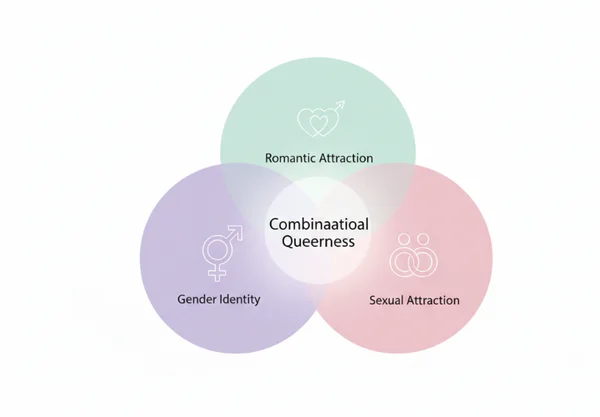
Today, the field of gay sexology has moved far beyond simply proving that being gay is statistically "normal." Modern theorists and clinicians explore incredibly complex concepts that better reflect actual, lived realities.
One such vital concept is combinatorial queerness, which suggests that a person's identity is an incredibly unique combination of various independent, overlapping factors—romantic attraction, sexual attraction, gender identity, and gender expression. Furthermore, modern sexology fully recognizes sexual fluidity, validating the fact that an individual's attractions and self-identification can naturally shift, deepen, and evolve over the course of their lifetime.
How Sexology Measures Desire: The Role of the Kinsey Scale
With the scientific understanding that sexuality is inherently fluid, how do we actually measure it? This is exactly where the infamous Kinsey Scale comes into play.
Developed by Alfred Kinsey, this specific scale fundamentally changed how society categorizes sexual orientation. Instead of using the rigid, limiting labels of "heterosexual" or "homosexual," the Kinsey Scale presents a continuum ranging from 0 to 6. A "0" represents exclusive heterosexuality, while a "6" represents exclusive homosexuality. The numbers 1 through 5 represent the beautiful, varying degrees of bisexuality or incidental attractions in between. This 0-6 spectrum visually and conceptually proves that human desire is rarely absolute.
Curious About Your Placement on the 0-6 Spectrum?
Understanding the rich history of sexology is academically fascinating, but actively exploring your own unique identity is highly personal and deeply empowering. If you are privately questioning where your true attractions lie, or if you simply want to see how Kinsey's groundbreaking theory applies to your own life, you do not have to guess.
Take our interactive, research-based assessment to explore your sexual orientation discreetly and safely. It takes just a few focused minutes to gain profound, validating clarity.
Start Your Kinsey Scale Exploration Here
The Role of Clinical Sexologists in the LGBTQ+ Community

While theoretical sexology provides the crucial academic framework, clinical sexologists and licensed sex therapists provide the practical, day-to-day support. Whether someone is searching for a local "sexologo gay" in a specific city or looking for supportive online queer sex therapy, these dedicated professionals are vital to community well-being.
Clinical sexologists help individuals navigate difficult coming out struggles, address sexual dysfunction, improve communication and intimacy in same-sex relationships, and affirm gender transitions. They provide a safe, educated, compassionate space where clients absolutely do not have to spend time educating their therapist on basic LGBTQ+ realities.
Whether you are seeking formal sex therapy to navigate complex emotional feelings or you are just beginning a private, quiet journey of self-discovery, understanding your personal baseline is essential. Complete the assessment on Kinseyscale.org to unlock an optional, AI-driven personalized report that offers deeper insights into your sexual orientation and actionable reflections for your personal growth.
Frequently Asked Questions
Is the Kinsey Scale the only way to measure sexuality?
No. While the Kinsey Scale was completely revolutionary for its time, modern sexology also utilizes other excellent models, such as the Klein Sexual Orientation Grid (KSOG). The KSOG measures orientation across multiple different variables (like private fantasies, actual behaviors, and deep emotional preferences) across past, present, and ideal future timelines.
Can my placement on the sexuality spectrum change over time?
Absolutely. Sexual fluidity is a very well-documented, completely natural phenomenon in modern sexology. An individual might genuinely identify as a 1 on the Kinsey Scale in their early twenties and later genuinely find themselves aligning closer to a 3 or 4 in their forties. This personal evolution is perfectly normal.
What is the difference between sexual orientation and gender identity?
Sexual orientation specifically refers to who you are physically, emotionally, or romantically attracted to (e.g., gay, straight, bisexual, pansexual). Gender identity refers to your internal, deeply held personal sense of your own gender (e.g., male, female, non-binary), regardless of the biological sex you were assigned at birth. Modern queer sexology insists that these are completely distinct, independent aspects of a person's life.