Is Sexuality a Choice? Science, Spectrum, and Self-Understanding
Is sexuality a choice? For most people, the honest short answer is no: sexual attraction is not something you simply decide to turn on, turn off, or redirect. At the same time, the fuller answer is more nuanced than a slogan. Sexuality includes attraction, identity, behavior, language, relationships, values, and self-understanding. Some of those parts involve personal reflection and choice, while the underlying pattern of attraction usually does not feel chosen. If you are trying to understand where your experience fits, a private educational tool like the Kinsey Scale self-reflection framework can offer a starting point without treating one score as your whole identity.

Short Answer: Attraction Is Not a Simple Switch
When people ask whether sexuality is a choice, they often mean sexual orientation: the pattern of emotional, romantic, or sexual attraction a person experiences toward people of a particular gender, more than one gender, or no one in a sexual way. That pattern is different from a single behavior, a public label, or a dating decision.
You can choose how to describe yourself, who you date, when you share personal information, and what boundaries fit your life. You usually do not choose who feels attractive to you in the first place. Many people can remember noticing attraction before they had the language, confidence, or social permission to name it. Others discover their pattern gradually through experience, reflection, or comparison with how other people describe attraction.
That is why "sexual preference" can be misleading when it implies a voluntary preference like choosing a favorite color. Some people do use preference casually, but sexual orientation is usually the more accurate phrase because it points to a deeper pattern rather than a casual option.
Is Sexuality Biological, Genetic, or Something Else?
Science does not support a single-cause explanation. Sexuality appears to be shaped by a complex mix of biological, developmental, genetic, hormonal, social, and personal factors. That does not mean every factor has equal weight for every person, and it does not mean orientation can be deliberately engineered.
Large genetic studies have also made the answer more careful. They do not show one "gay gene" or one simple biological switch. Instead, research points toward many small influences and a lot of individual variation. This matters because two oversimplified claims are both weak: "sexuality is only a choice" and "sexuality is completely explained by one gene." Human sexuality is more complex than either phrase.
For a reader, the practical takeaway is this: you do not need to prove a perfect biological cause before your attractions are real. You also do not need to reduce your whole identity to biology. A respectful view can hold both ideas at once: attraction is usually experienced as unchosen, and self-understanding can still grow over time.

Why Sexuality Is Better Understood as a Spectrum
The question "is sexuality a choice or genetic?" often assumes there are only a few fixed boxes. Real experience is often more varied. Some people are exclusively attracted to another gender. Some are exclusively attracted to the same gender. Some are attracted to more than one gender, with different intensities, contexts, or patterns over time. Some people experience little or no sexual attraction and may identify as asexual.
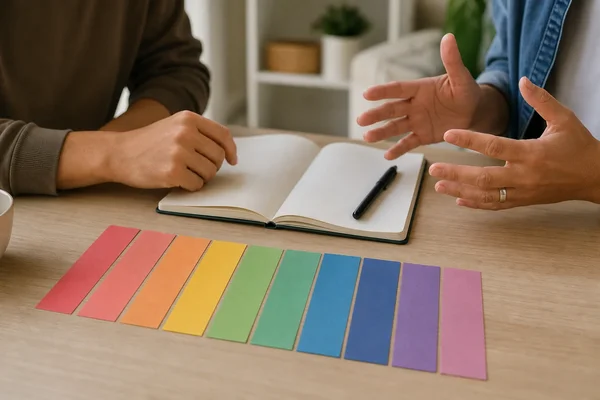
The Kinsey Scale became influential because it challenged a strict either-or model. Instead of dividing everyone into only heterosexual or homosexual categories, it placed sexual experience and attraction along a 0-6 continuum, with an additional X category for people reporting no socio-sexual contacts or reactions in the original framework.
That spectrum idea can be useful, but it also has limits. A single scale cannot capture every dimension of modern sexuality, including romantic attraction, gender diversity, asexuality, culture, relationship context, or the difference between attraction and identity. The value of a spectrum is not that it gives every person a perfect number. Its value is that it makes room for complexity.
What You Can Choose, and What You Usually Cannot
It helps to separate the parts of sexuality that people often blend together. Attraction is about who you are drawn to. Identity is the language you use for yourself. Behavior is what you do or do not do. Disclosure is who you tell. Community is where you find belonging. Values are how you make decisions about relationships, intimacy, and safety.
Here is a simple way to sort the question:
| Part of experience | Usually chosen? | A more useful question |
|---|---|---|
| Attraction | Usually not | What patterns do I notice over time? |
| Identity label | Often partly | Which words feel accurate and comfortable? |
| Behavior | Yes, within real-life limits | What choices respect my boundaries and others' consent? |
| Disclosure | Yes | Who has earned access to this information? |
| Exploration | Yes | What helps me reflect without pressure? |
This distinction prevents two common mistakes. The first is telling people they chose their orientation because they can choose behavior. The second is telling people they have no agency at all because attraction is not voluntary. A balanced view protects both truth and autonomy.
Why the Question Can Feel So Personal
For many readers, this is not an abstract science question. It can affect family conversations, faith communities, dating, safety, and self-trust. If someone has been told their attraction is a bad decision, the phrase "sexuality is a choice" can feel blaming. If someone is trying to live according to personal or religious values, they may also want language that respects agency around behavior and identity.
Both concerns deserve care. Saying orientation is not a simple choice does not force anyone into a label, a relationship path, or a public identity before they are ready. It simply recognizes that attraction itself is not usually produced by willpower. From there, each person can decide how to reflect, what language to use, which relationships feel healthy, and what kind of support they want.
Forum discussions, including Reddit-style conversations, often show this same pattern: people describe not choosing their attractions, while also describing choices about labels, coming out, dating, celibacy, faith, community, or timing. Those stories are not scientific proof by themselves, but they do show why the question needs more than a yes-or-no answer.
A Practical Reflection Check
If you are asking this question about yourself, try to move from debate to observation. You do not have to force a permanent answer today. Instead, notice patterns with patience.
Ask yourself:
- What kinds of attraction have I experienced more than once?
- Are my feelings about attraction different from my feelings about labels?
- Do I feel pressure to choose a word before I understand my experience?
- Which environments make reflection feel safer and calmer?
- What would I tell a friend who was asking the same question?
It can also help to write down the difference between "I chose this" and "I noticed this." For example, "I chose not to date right now" is different from "I noticed I am attracted to more than one gender." One is a decision about behavior. The other is an observation about attraction.
If you want a structured but low-pressure way to think about spectrum language, the sexual orientation spectrum tool on Kinseyscale.org can be used as an educational prompt. Treat any result as a reflection aid, not as a final verdict.

How the Kinsey Scale Fits the Choice Question
The Kinsey Scale is relevant because it separates sexuality from rigid categories. A person may not feel fully represented by only "straight," "gay," or "bisexual." A spectrum model can make it easier to talk about degrees, patterns, and uncertainty.
However, a Kinsey-style score should not be used to argue that a person chose their sexuality, or that a number can settle every identity question. It is better understood as a snapshot of reported attraction, behavior, or response patterns within a specific framework. The meaning of that snapshot depends on context: age, language, culture, relationship history, comfort with labels, and how a person understands attraction.
That is also why a scale can be helpful without being absolute. It can give you words for reflection, but it cannot replace lived experience, personal boundaries, or supportive conversation.
Using the Question as a Reflection Tool
So, is sexuality a choice? Sexual attraction is usually not a voluntary choice, and sexual orientation is better understood as a pattern than a decision. But people do make choices around language, privacy, relationships, behavior, community, and how they explore their own experience.
A good answer should not shame people for what they notice, and it should not rush anyone into a label. It should make room for both honesty and agency. If the question is personal for you, focus less on proving a cause and more on observing your experience with care. You can review a private Kinsey Scale exploration as one educational step, then keep the result in perspective: it is a beginning point for reflection, not a rule about who you must be.
FAQ
Can you choose your sexuality?
Most people do not experience sexual attraction as something they choose. You may choose labels, relationships, boundaries, and whether to share personal information, but the underlying pattern of attraction usually is not controlled by willpower.
Is sexuality a choice according to science?
Scientific research generally points to a complex mix of biological, genetic, hormonal, developmental, and social factors. It does not support the idea that people simply decide their orientation, and it also does not reduce sexuality to one gene or one cause.
Is sexuality a spectrum?
Yes, sexuality is often better understood as a spectrum than as a strict binary. The Kinsey Scale is one well-known spectrum model, though it is not the only model and cannot capture every part of identity, attraction, or relationship experience.
What are the 4 types of sexuality?
A simple introductory grouping often includes heterosexual, homosexual or gay/lesbian, bisexual, and asexual. Many people also use other identity terms, such as pansexual, queer, or questioning. The best term depends on a person's own experience and language.
Are you in control of your sexuality?
You may not be in control of who you are attracted to, but you do have agency over behavior, boundaries, disclosure, labels, relationships, and support. Control is the wrong word for attraction, but agency is still important.
What if my sexuality changes over time?
Some people experience stability, and others notice change, growth, or clearer self-understanding over time. A change in language or awareness does not mean the original feelings were fake. It may mean you have more information about yourself.
What does religion say about sexuality being a choice?
Religious traditions answer this in different ways. If this question matters in your faith context, consider speaking with a trusted faith leader or counselor who can discuss belief, consent, mental well-being, and personal dignity without pressuring you into fear-based decisions.