Kinsey Scale X: Asexuality & No Socio-Sexual Response Explained
When people discuss the famous sexuality spectrum, they often focus on the numbers 0 through 6. But there's another, often overlooked category: 'X'. This classification can feel confusing or isolating for those who don't see themselves reflected in the more commonly discussed scores. If you've ever wondered about this part of the scale, you're not alone. The journey of self-discovery is unique for everyone, and understanding all the tools available is a crucial first step. What is the Kinsey Scale? It's more than just numbers; it's a framework for exploring the beautiful complexity of human attraction, and that includes the Kinsey Scale X.
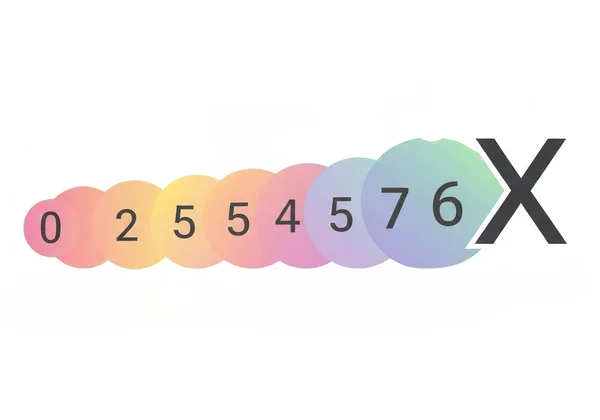
We'll shed light on the 'X' category in this guide. We'll explore its original meaning, connect it to modern understandings of asexuality, and provide a compassionate space for self-reflection. Your identity is valid, and understanding where you might fit on this spectrum is a powerful part of your personal story. Ready to learn more about this important aspect of sexuality? You can always start your exploration on our homepage.
What Does the 'X' on the Kinsey Scale Mean?
To truly grasp the meaning of 'X', we need to look back at its origins with Dr. Alfred Kinsey. His groundbreaking research in the mid-20th century challenged rigid ideas about sexuality. He proposed a seven-point scale to represent the fact that sexual orientation exists on a continuum. While scores 0 (exclusively heterosexual) to 6 (exclusively homosexual) captured a wide range of experiences, Kinsey recognized that they didn't capture everyone.
The 'X' category was his solution for individuals who did not fit within that primary spectrum. It represents a distinct position that is not defined by the gender of one's partners but by the nature of one's socio-sexual responses themselves. Understanding this historical context is key to appreciating its modern relevance in conversations about asexuality and attraction. It was a forward-thinking acknowledgment that the landscape of human sexuality is vast and varied.
The Origin of 'X': Kinsey's "No Socio-Sexual Response"
In his original work, Alfred Kinsey designated the 'X' category for individuals who reported having no socio-sexual contacts or reactions. This is a very specific and often misunderstood definition. It doesn't necessarily mean a lack of romantic feeling or emotional connection; it refers specifically to a lack of sexual response or activity in a social context.
Kinsey was a meticulous scientist, and 'X' was not an afterthought. It was a necessary classification for the portion of his interview subjects whose experiences couldn't be plotted between the heterosexual-homosexual poles. This could include people who simply did not experience sexual attraction or did not engage in sexual behaviors that would allow them to be rated on the 0-6 scale. This early concept laid the groundwork for future discussions about identities that exist outside the traditional allosexual (experiencing sexual attraction) framework.

Distinguishing 'X' from Celibacy or Abstinence
A common point of confusion is equating the Kinsey 'X' with choices like celibacy or abstinence. This is a critical distinction to make. Celibacy and abstinence are behaviors—they are conscious decisions to refrain from sexual activity, often for personal, religious, or health reasons. A person who is celibate or abstinent can still experience strong sexual attraction to others.
In contrast, the 'X' category, particularly in its modern interpretation, is about one's innate feelings and attractions, not their actions. It describes an internal state of being—the absence of sexual attraction itself—rather than a choice about behavior. Someone might identify with 'X' because they simply don't feel sexual desire, which is fundamentally different from feeling that desire but choosing not to act on it. Understanding this nuance is key to validating the experiences of those on the asexual spectrum.
Connecting 'X' to Modern Understandings of Asexuality
While Kinsey's work was revolutionary for its time, our language and understanding of sexual identity have evolved significantly. Today, the 'X' category is most closely associated with asexuality. The asexual community has grown in visibility, developing a rich vocabulary to describe a wide range of experiences that Kinsey’s "no socio-sexual response" only began to touch upon.
This connection provides a bridge between historical research and contemporary lived experiences. It allows us to see the asexuality Kinsey Scale discussion not as a new invention but as part of an ongoing conversation about the diversity of human attraction. For many, understanding 'X' is the first step toward finding the language that truly fits their identity, offering a sense of validation and community that is incredibly empowering. If you're curious about where you fall on the spectrum, you can always take our free test.
Asexuality Defined: Beyond the Kinsey Spectrum
So, what is asexuality? At its core, asexuality is a sexual orientation characterized by a persistent lack of sexual attraction toward any gender. It is a diverse and valid identity on the sexual orientation spectrum. Keep in mind that asexuality centers on attraction, not on actions. Asexual individuals (often called "aces") may still choose to engage in sexual activity for various reasons, such as pleasing a partner or a desire for physical intimacy, but they don't feel the inherent sexual pull that allosexual people do.
Furthermore, asexuality exists on its own spectrum. Some people may identify as demisexual (only feeling sexual attraction after forming a strong emotional bond) or greysexual (experiencing sexual attraction rarely or with low intensity). These identities highlight that the absence of attraction isn't an all-or-nothing concept, reflecting the same nuance that Kinsey sought to capture with his original scale.
Aromanticism and Other Forms of Non-Sexual Attraction
Another vital aspect of this conversation is understanding that sexual attraction is just one type of attraction. This is where concepts like aromanticism become important. A person who is aromantic does not experience romantic attraction. They may not desire romantic relationships, but this is separate from their sexual orientation.
Someone can be asexual and aromantic, but they can also be asexual and still desire deep, romantic connections (heteroromantic, homoromantic, biromantic, etc.). People also experience other forms of attraction, such as:
- Aesthetic Attraction: Appreciating someone's appearance or beauty without any romantic or sexual feelings.
- Sensual Attraction: The desire to engage in sensual (but not sexual) acts with someone, like cuddling or holding hands.
- Platonic Attraction: The desire to be friends with someone.
Recognizing these different forms of non-sexual attraction helps create a more complete picture of human connection, validating the rich emotional lives of asexual and aromantic individuals.
Exploring Your Identity: Is the 'X' Category Right for You?
Your journey of self-discovery is deeply personal. If you've read this far and feel a sense of recognition, the 'X' category might be a concept that resonates with you. It's not about fitting into a neat box but about finding language that helps you understand yourself better. For many, discovering terms like asexuality or aromanticism feels like coming home—it provides a name for an experience they've had for a long time but couldn't articulate.
Remember, this exploration is yours alone. There is no right or wrong way to identify. The purpose of tools like the Kinsey Scale is not to label you definitively but to offer a lens through which you can view your own unique experiences. It's a starting point for reflection, and our goal is simply to provide a safe and informative space for that process. To learn more, consider our Kinsey Scale quiz for a gentle introduction.
The Fluidity and Spectrum of Non-Sexual Identities
Just like other aspects of orientation, asexuality and aromanticism can be fluid. Sexual fluidity is the idea that a person's attractions can change over time. Someone might identify as asexual for many years and later find they experience sexual attraction, or vice versa. There is no timeline or requirement for how you identify.
Your identity is valid today, and it will be valid tomorrow, even if it evolves. This journey is about honoring your feelings in the present moment. Embrace the complexity and allow yourself the grace to grow and change. This process of identity exploration is a natural and healthy part of being human.
Resources and Community for Asexual Individuals
Finding community can be a transformative experience. Knowing you are not alone is incredibly affirming. If you identify with the asexual spectrum, there are many resources available to help you connect with others and learn more. Online forums, local meetups, and educational websites can provide a sense of belonging and support.
Organizations like The Asexual Visibility and Education Network (AVEN) offer a wealth of information and are a great starting point. Connecting with the asexual community can provide validation, friendship, and a space to share experiences with people who understand. This support system is an invaluable part of the self-discovery journey. You can always discover your results and begin your path with us.
Your Ongoing Journey of Self-Discovery
Understanding the Kinsey Scale 'X' is about more than just defining a term; it's about acknowledging and validating a whole spectrum of human experience that is often invisible. From Kinsey's original concept of "no socio-sexual response" to the modern, vibrant community of asexual individuals, the 'X' represents a valid and important part of our collective understanding of identity.
Your journey is yours to define. Whether you identify with 'X', another number on the scale, or reject labels entirely, the most important thing is to be true to yourself. We encourage you to continue learning, questioning, and exploring with an open heart.
If you're ready to take the next step in your journey, you can take our confidential and insightful Kinsey Scale test. It’s a tool for reflection, designed to help you on your path to greater self-awareness.
Frequently Asked Questions About Kinsey Scale 'X' and Asexuality
What does a score of 'X' on the Kinsey Scale signify?
A score of 'X' on the Kinsey Scale traditionally signifies "no socio-sexual contacts or reactions." In modern terms, it is most closely associated with asexuality, which is a lack of sexual attraction to others. It is not about behavior like celibacy but rather about one's innate level of sexual attraction.
Is identifying as asexual the same as getting an 'X' on the Kinsey Scale?
While they are closely related, they aren't exactly the same. 'X' was Kinsey's clinical term from the 1940s. Asexuality is a modern, community-defined identity that is much more nuanced and encompasses a spectrum of experiences (like demisexuality and greysexuality). Many people who identify as asexual would likely score as 'X' on the test, making 'X' a useful historical analogue. You can understand your score further on our platform.
Can someone's Kinsey 'X' score change over time?
Yes. Sexuality and identity can be fluid for some people. A person might identify as asexual and score an 'X' at one point in their life and experience a shift in their attractions later. There is no "correct" or permanent score; the scale is a tool to reflect your experiences at a given time.
Where can I find more resources on asexuality?
The Asexual Visibility and Education Network (AVEN) is an excellent and widely trusted resource with forums, articles, and definitions. Additionally, many LGBTQ+ centers and online communities offer support and information for asexual individuals. Exploring these resources can be a wonderful next step after beginning your journey of self-reflection.