Sexual Orientations — A Complete Guide to Types, Definitions, and the Spectrum
Sexual orientations shape how you experience attraction, connection, and intimacy. Whether you are exploring your own identity or trying to understand someone you care about, knowing the language and landscape of sexual orientation can be genuinely empowering. However, misinformation and oversimplification often make things more confusing than they need to be.
This guide breaks down what sexual orientation actually means, walks you through the most recognized types, explains the spectrum model, and helps you understand key distinctions — like the difference between sexual and romantic attraction. You will also find a self-reflection pathway if you want to explore the Kinsey Scale as a starting point for deeper self-understanding.
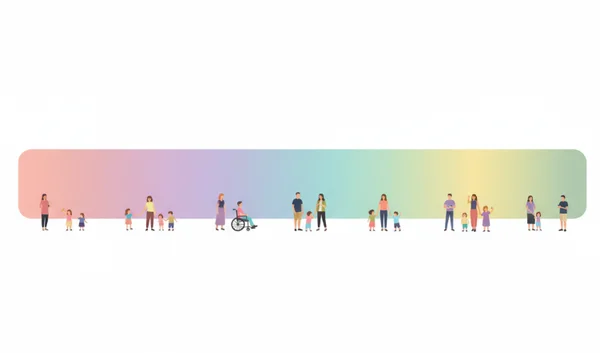
What Does Sexual Orientation Mean?
Sexual orientation describes an enduring pattern of emotional, romantic, or sexual attraction toward other people. It is not simply about who you are physically attracted to — it also encompasses emotional bonds, romantic desires, and who you want to build relationships with.
A few key points help clarify the concept:
- It is about attraction, not behavior. You do not need to act on attraction for it to be real.
- It is distinct from gender identity. Gender identity is about who you are. Sexual orientation is about who you are drawn to.
- It is not a choice. Research consistently shows that sexual orientation is influenced by a complex mix of biological, environmental, and personal factors — not by conscious decision.
Many people discover their sexual orientation definition through lived experience rather than a single defining moment. For some, it feels clear from a young age. For others, understanding what sexual orientation means takes longer — and that is perfectly normal.
How Many Sexual Orientations Are There?
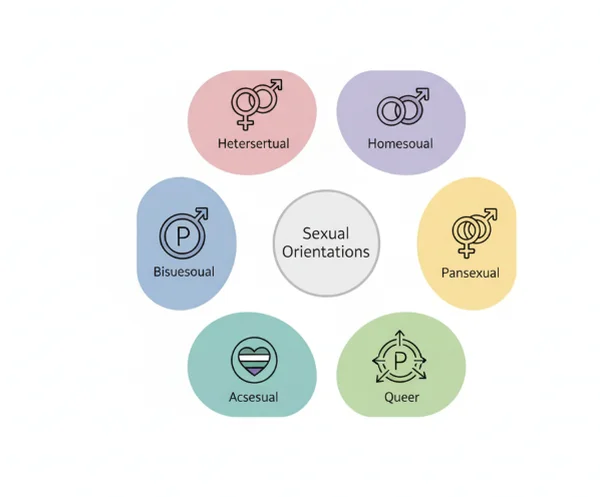
There is no single definitive number. As language and self-understanding evolve, so do the terms people use. However, several widely recognized sexual orientations appear consistently across clinical literature, advocacy organizations, and personal communities.
Here are the most commonly referenced types:
Heterosexual (Straight)
Attraction primarily to people of a different gender. This is the most statistically common orientation worldwide.
Homosexual (Gay or Lesbian)
Attraction primarily to people of the same gender. "Gay" is often used for men attracted to men. "Lesbian" describes women attracted to women. The older term "homosexual" is considered outdated or clinical by many.
Bisexual
Attraction to people of your own gender and other genders. Bisexuality does not require equal attraction across genders — the balance can shift over time or across contexts.
Pansexual
Attraction to people regardless of gender. For many pansexual individuals, gender plays little to no role in who they find attractive.
Asexual (Ace)
Experiencing little to no sexual attraction. Asexuality exists on its own spectrum. Some asexual people still experience romantic attraction, desire closeness, or choose to engage in sexual activity for various personal reasons.
Queer
An umbrella term reclaimed by many in the LGBTQ+ community. It can describe anyone who does not identify as exclusively heterosexual or cisgender. Some people prefer it because it avoids more rigid labels.
Additional Orientations
- Demisexual — Sexual attraction develops only after a strong emotional bond forms.
- Graysexual — Sexual attraction is experienced rarely or under very specific circumstances.
- Polysexual — Attraction to multiple, but not necessarily all, genders.
- Omnisexual — Attraction to all genders, where gender may still play a role in the nature of attraction.
- Abrosexual — Sexual orientation that naturally shifts or fluctuates over time.
There is no pressure to label yourself. These terms exist as tools — not boxes.
What Is the Difference Between Bisexual and Pansexual?
This is one of the most frequently asked questions about sexual orientations — and for good reason. The two terms overlap, but they are not identical.
| Aspect | Bisexual | Pansexual |
|---|---|---|
| Attraction scope | Attraction to your own gender and other genders | Attraction to people regardless of gender |
| Role of gender | Gender may influence the type or intensity of attraction | Gender is typically not a factor |
| Community usage | Broader historical recognition | Growing in visibility and use |
In practice, some people who fit both definitions choose the label that feels most authentic to them. Neither term is more "inclusive" or "correct" than the other.
The key takeaway: both orientations acknowledge attraction to more than one gender. The difference lies in how much weight gender carries in that attraction.
How Is Sexual Orientation Different from Gender Identity?
These two concepts are often confused, but they operate on entirely separate dimensions.
- Sexual orientation is about who you are attracted to — emotionally, romantically, or sexually.
- Gender identity is about who you are — your internal sense of being male, female, nonbinary, or another gender.
A person's gender identity does not predict their sexual orientation. For example, a transgender woman may identify as straight, lesbian, bisexual, or any other orientation — just like a cisgender woman.
Understanding this distinction matters because it helps avoid harmful assumptions. When you separate these two ideas, you give people room to describe their full experience rather than forcing them into a single oversimplified category.
Can Sexual Orientation Change Over Time?
For some people, yes — and that does not make their identity any less valid.
Sexual fluidity is a well-documented experience. Research suggests that while core patterns of attraction tend to remain relatively stable for most people, shifts in how someone experiences or identifies their orientation can and do happen. This is especially common during periods of significant personal growth, new relationships, or deeper self-reflection.
A few important points:
- Fluidity is not the same as choice. Changes in orientation happen naturally and are not something a person decides.
- Fluidity does not undermine identity. If your understanding of your orientation evolves, it does not erase your previous experience.
- Conversion therapy has been widely discredited. Attempts to forcibly change someone's orientation cause harm. Every major psychological association opposes it.
If you notice your feelings shifting, that is part of being human — not a sign that something is wrong.

What Is the Difference Between Romantic and Sexual Attraction?
Not everyone experiences romantic and sexual attraction in the same way — or toward the same people. This is called the "split attraction model," and it helps explain experiences that a single label might not capture.
Sexual Attraction
A desire for sexual contact or interaction with someone. It often involves physical arousal or a pull toward someone's body.
Romantic Attraction
A desire for emotional closeness, partnership, and romantic gestures — like wanting to go on dates, share a life, or feel deeply bonded with someone.
Why This Distinction Matters
Some people are sexually attracted to one gender but romantically attracted to another. Others experience romantic attraction but little to no sexual attraction (common in the asexual spectrum). Recognizing both dimensions gives you a more complete picture of your experience.
Common romantic orientation terms include:
- Heteroromantic — Romantic attraction to a different gender
- Homoromantic — Romantic attraction to the same gender
- Biromantic — Romantic attraction to more than one gender
- Aromantic — Little to no romantic attraction
How the Kinsey Scale Fits into Self-Exploration
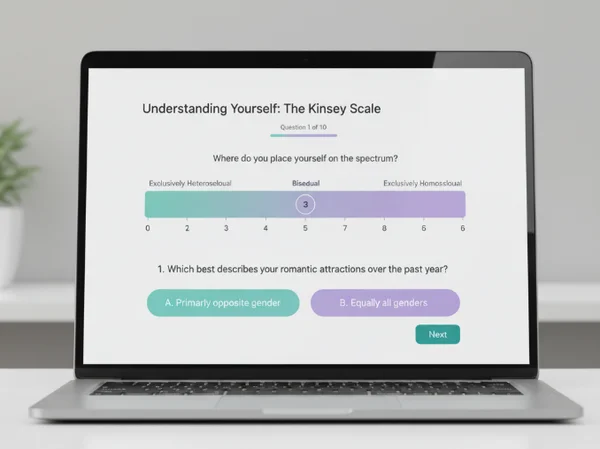
If you are curious about where you might fall on the sexual orientation spectrum, structured self-reflection tools can help you organize your thoughts. The Kinsey Scale is one of the earliest and most well-known frameworks — it places orientation on a 0-to-6 continuum rather than in fixed categories.
Here is what to keep in mind:
- The scale measures a range, not a diagnosis. Your position may reflect your experiences at one point in time.
- No score is better or worse than another. The scale simply provides a framework for reflection.
- It is a starting point, not a final answer. Many people use it alongside broader self-reflection.
If you would like to explore this framework for yourself, you can try the Kinsey Scale test as a private, educational exercise. It is not a clinical assessment — just a way to reflect on your patterns of attraction in a structured way.
This tool is intended for self-understanding and education. It does not provide a diagnosis or replace professional guidance.
Embracing Your Identity — What Matters Most
Understanding sexual orientations is not about finding the perfect label. It is about giving yourself permission to explore who you are without judgment.
Here are a few things worth remembering:
- Self-identification is what counts. Only you get to define your orientation.
- There is no timeline. Some people know early. Others figure things out over decades. Both paths are valid.
- Support matters. Whether through trusted friends, communities, or professionals, having people who respect your journey makes a real difference.
- When to seek professional support: If your feelings about your orientation are causing significant distress, a qualified therapist who specializes in identity and sexuality can help — not to change you, but to support you.
Your orientation is one part of a much larger, richer identity. It deserves understanding, not pressure.
If you are looking for a simple, private way to begin reflecting on your patterns of attraction, the Kinsey Scale exploration tool can help you organize your thoughts at your own pace.
Frequently Asked Questions
What are the main types of sexual orientation?
The most widely recognized types include heterosexual, homosexual (gay/lesbian), bisexual, pansexual, and asexual. Additional identities like demisexual, polysexual, omnisexual, and queer are also increasingly acknowledged. Each describes a distinct pattern of attraction.
Is sexual orientation a choice?
No. Research from major psychological and medical organizations consistently shows that sexual orientation is not a conscious choice. It is shaped by a complex interaction of biological, psychological, and environmental factors that are still being studied.
What does sexual orientation mean in simple terms?
Sexual orientation refers to who you feel attracted to — emotionally, romantically, or sexually. It describes the natural pattern of who draws your interest when it comes to relationships and intimacy.
How is sexual orientation different from gender identity?
Sexual orientation is about who you are attracted to. Gender identity is about who you are — your internal sense of being male, female, nonbinary, or another gender. The two are separate aspects of a person's identity.
Can you be attracted to more than one gender?
Yes. Bisexual, pansexual, polysexual, and omnisexual are all terms that describe attraction to more than one gender. Each term captures a slightly different nuance in how gender factors into that attraction.
What is sexual fluidity?
Sexual fluidity means that a person's patterns of attraction may shift over time. This is a natural experience for some people. It does not mean orientation is a choice — it simply reflects the complexity of human attraction.
What is the Kinsey Scale?
The Kinsey Scale is a framework developed by Alfred Kinsey that places sexual orientation on a 0-to-6 spectrum, ranging from exclusively heterosexual to exclusively homosexual. It was one of the first models to suggest that orientation is not strictly binary.
When should someone seek professional support about their orientation?
If feelings about your sexual orientation are causing persistent distress, confusion, or anxiety that affects your daily life, speaking with a qualified therapist who specializes in identity and sexuality may be helpful. Professional support should affirm — never attempt to change — who you are.