Signs You Are Bisexual: Finding Your Place on the Spectrum
Questioning who you are attracted to can feel overwhelming. You might wonder if your feelings are "real" or just a temporary phase. It is completely normal to feel unsure about where you fit, especially when society often presents sexuality as a simple choice between being straight or gay. However, human attraction is rarely that black and white.
If you are reading this, you are likely looking for clarity. You want to understand if your feelings align with the signs you are bisexual. This guide will help you navigate those confusing signals by exploring common characteristics, debunking myths, and introducing the Kinsey Scale test as a helpful framework for self-discovery. By the end, you will have a clearer picture of your own unique place on the sexuality spectrum.
It's Not Just 50/50: Understanding How to Know If You Are Bisexual
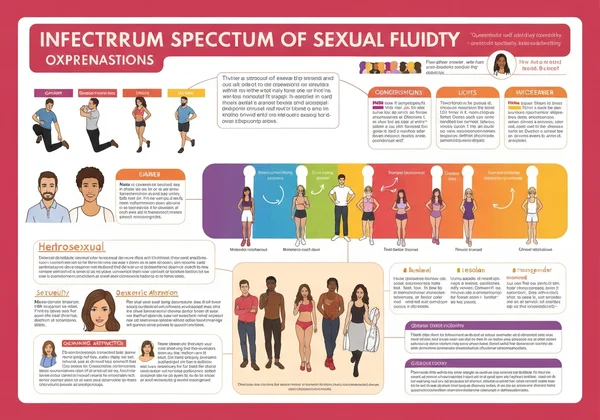
One of the biggest hurdles in figuring out how to know if you are bisexual is the misconception of the "perfect split." Many people believe that to be "truly" bisexual, you must like men and women exactly the same amount.
This couldn't be further from the truth. Bisexuality is not a math problem. It is an identity defined by the potential for attraction to more than one gender, not by an equal division of those feelings.
The Myth of the "Perfect Split"
If you are waiting for your attraction to be exactly 50/50, you might be waiting forever. Most bisexual people lean towards one gender more than the other. You might be 90% attracted to women and 10% to men, or vice versa.
This preference doesn't make your identity invalid. It just means you have a preference. Think of it like food: just because you prefer pizza over tacos doesn't mean you don't enjoy tacos. Your preference doesn't erase your capacity to enjoy both.
Sexual vs. Romantic Attraction: They Can Be Different
Another confusing factor is when your heart and your body seem to want different things. This is known as the "Split Attraction Model."
- Sexual Attraction: Who you want to be physically intimate with.
- Romantic Attraction: Who you want to build a relationship or emotional bond with.
For example, you might feel sexually attracted to men and women, but only see yourself settling down romantically with one specific gender. This alignment is a common experience among those identifying with bisexual characteristics. Recognizing that these two types of attraction can operate independently is a huge step in self-understanding.
Common Bisexual Characteristics & Signs to Look For
While everyone's journey is unique, there are shared experiences that often point toward bisexuality. If you find yourself nodding along to the following points, it may be a strong indicator of your orientation.

The "Bi-Cycle": Why Your Preferences Might Shift
Have you ever gone through a period where you felt strictly gay, followed by a month where you felt strictly straight? This phenomenon is jokingly referred to in the community as the "Bi-Cycle."
Your attraction isn't static; it flows. One week you might notice men more, and the next week, women catch your eye. This shifting preference can be confusing and make you doubt yourself. However, the very fact that your attraction shifts between genders is one of the clearest signs you are bisexual.
Looking Back: Did You Have Specific "Crushes" on Friends?
Hindsight is often 20/20. Many people realize later in life that their intense "admiration" for a same-sex friend was actually a crush.
- Did you want to be exactly like them, or did you want to be with them?
- Did you feel jealous when they dated others?
- Did you feel a nervous "butterfly" feeling around certain friends that you couldn't explain?
These intense platonic friendships often mask deeper romantic feelings that we weren't ready to label at the time.
Common Signs of Bisexuality in Females
For women, societal pressure often blurs the lines between female friendship and romance. Here are specific signs of bisexuality in females to consider:
- The "Girl Crush" Exception: You consider yourself straight but have one or two specific female celebrities or friends you are genuinely attracted to.
- Emotional Intimacy First: You might find that your attraction to women grows from deep emotional bonds rather than immediate physical spark.
- Drunken Confidence: You only feel comfortable expressing attraction to other women when inhibitions are lowered (like at a party).
Common Signs of Bisexuality in Males
Men often face stricter social stigma, which can make signs of bisexuality in males harder to spot or accept.
- Performance Anxiety: You might feel pressure to perform extreme masculinity to compensate for "soft" feelings toward other men.
- Fantasy vs. Reality: You might exclusively date women but frequently use gay pornography for solo intimacy.
- The "Bromance" Blur: You have male friendships that feel emotionally deeper and more physically affectionate than the standard "bro" dynamic.
"Am I Bisexual or Just Curious?" Dealing With Imposter Syndrome
This is the most common question: Am I bisexual or just curious? It stems from a feeling known as "Imposter Syndrome." You might feel like you are faking it or invading a space that doesn't belong to you.
Why Sexual Experience Isn't Required for Orientation
There is a dangerous myth that you need a "resume" to prove your sexuality. You do not need to date or sleep with a specific gender to validate your attraction to them.
Think about straight people. A straight teenager knows they are straight before their first kiss. Similarly, you can know you have the potential for attraction without having acted on it yet. Your internal feelings are valid evidence on their own.
Understanding the "Imposter Syndrome" in the Bi Community
If you have lived most of your life appearing straight, claiming a queer identity can feel fraudulent. You might think, "I haven't suffered enough," or "I'm currently in a straight relationship, so I don't count."
This invalidation is internal, not external. Your relationship status describes your partner, not your orientation. Being in a monogamous relationship doesn't turn off your attraction to other genders; it just means you are committed to one person.
From Confusion to Clarity: Using the Kinsey Scale
Recognizing the signs you are bisexual is a powerful first step. However, reading a list of signs can sometimes leave you feeling like everything is still a bit "fuzzy." You might recognize some traits but not others, leading to more questions.
This is where moving from qualitative "signs" to a quantitative "measure" can be incredibly grounding.
Why Identifying Your Number Can Help (0-6 Scale)
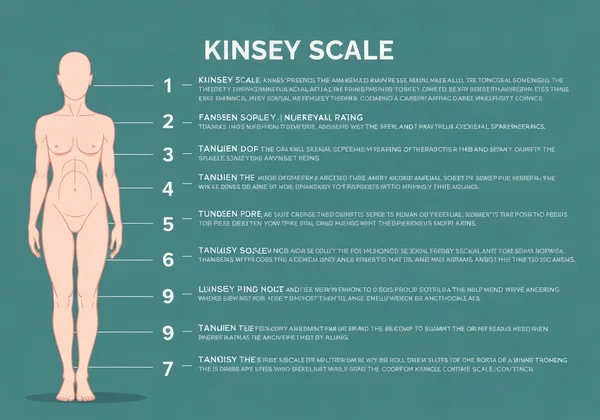
The Kinsey Scale is a tool designed to measure sexual orientation on a spectrum from 0 (exclusively heterosexual) to 6 (exclusively homosexual). Bisexuality usually falls somewhere in the 1 to 5 range.
- Kinsey 1: Predominantly heterosexual, only incidentally homosexual.
- Kinsey 3: Equally heterosexual and homosexual.
- Kinsey 5: Predominantly homosexual, only incidentally heterosexual.
Seeing your feelings represented as a number on a scale can validate the concept of fluidity. It helps you realize that being a "2" or a "4" is just as valid as being a "0" or a "6."
Using Our Tool as a Mirror for Self-Reflection
If you are still asking yourself "where do I fit?", we recommend using a structured assessment to organize your thoughts. It is not about a computer telling you who you are; it is about asking the right questions to help you tell yourself who you are.
By evaluating your physical attraction, emotional attachment, and fantasies separately, you can get a comprehensive view of your orientation.
Ready to explore your placement?
Take our free, educational Kinsey Scale assessment to visualize where you might land on the spectrum. It’s a safe, anonymous way to turn your confusion into clarity.
Embracing Your Journey on the Spectrum
Discovering signs you are bisexual is a journey, not a race. There is no deadline for figuring it out, and there is no "right" way to be bisexual. Whether you fall in the middle of the spectrum or lean heavily to one side, your feelings are real and valid.
Remember, labels are tools meant to help you understand yourself, not cages to trap you. Use the resources available, like our comprehensive sexuality spectrum guide, to continue exploring at your own pace. You are the only expert on your own life.
Frequently Asked Questions
What is the difference between bisexual and pansexual?
Bisexuality typically refers to attraction to more than one gender (often defined as "my gender and other genders"). Pansexuality is often defined as attraction regardless of gender, where gender plays no role in the attraction. The terms overlap, and many people use them interchangeably depending on what feels right.
Can I be bisexual if I am currently in a straight relationship?
Yes, absolutely. Your orientation is about who you can be attracted to, not just who you are currently dating. Being in a straight-passing relationship does not revoke your bisexuality.
Is there a way to know for sure if I am bisexual?
There is no blood test for sexuality. The only "proof" is your own internal experience. If you find yourself consistently capable of romantic or sexual attraction to more than one gender—regardless of frequency—that is the surest sign. Trust your own intuition.
Is bisexuality just a phase?
For the vast majority of people, no. While sexuality can be fluid and shift over time (the Bi-Cycle), bisexuality is a stable and valid sexual orientation, not just a stepping stone to being gay or straight.