What Is Sexuality — A Clear Guide to Orientation, Identity, and the Spectrum
You have probably typed "what is sexuality" into a search bar because something inside you wants a clearer picture. Maybe a conversation sparked curiosity, or maybe you are quietly sorting through feelings that do not fit a single label. Either way, you deserve a straightforward answer — not a lecture.
Sexuality is one of the most personal parts of who you are, yet it is also one of the most misunderstood. This guide breaks down what sexuality actually means, walks you through the most recognized types of sexual orientation, explains how the sexuality spectrum works, and shows you a low-pressure way to explore the Kinsey Scale at your own pace. You will also find a checklist for healthy self-reflection and a clear FAQ section at the end.
What Does Sexuality Mean in Simple Terms?
Sexuality describes the full range of your sexual feelings, attractions, thoughts, and behaviors toward other people. It is not just about who you sleep with. It also includes emotional bonds, romantic desires, fantasies, and how you see yourself in relation to others.
Here is a quick way to think about it. Sexuality covers:
- Who you are attracted to — emotionally, romantically, or physically
- How you experience attraction — strongly, rarely, or only after a deep connection
- How you express yourself — through relationships, identity labels, or personal boundaries
The World Health Organization notes that sexuality is shaped by biological, psychological, social, and cultural factors. Because so many forces play a role, no two people experience sexuality in exactly the same way.
This content is for educational purposes and self-reflection only. It does not replace professional guidance from a licensed counselor or therapist.
What Is the Difference Between Sexuality and Sexual Orientation?
Many people use these terms interchangeably, but they are not the same thing. Sexuality is the broader umbrella. Sexual orientation is one piece underneath it.
| Term | What It Covers |
|---|---|
| Sexuality | Attractions, desires, behaviors, identity, emotional patterns, values, and how you relate to intimacy overall |
| Sexual orientation | Specifically who you feel romantic, emotional, or sexual attraction toward |
Think of sexuality as the entire landscape and sexual orientation as one particular trail within it. Understanding this difference helps you avoid reducing a complex human experience to a single label.
What Are the Different Types of Sexual Orientation?
Sexual orientation exists along a broad range. Below are the most widely recognized types. Keep in mind that labels are tools for understanding — not boxes that lock you in.
Heterosexual (Straight)
Attraction primarily to people of a different gender. This is the most commonly reported orientation worldwide.
Homosexual (Gay or Lesbian)
Attraction primarily to people of the same gender. "Gay" is often used for men, while "lesbian" typically refers to women.
Bisexual
Attraction to more than one gender. Bisexuality does not require equal attraction to all genders, and it can shift over time.
Pansexual
Attraction to people regardless of gender. For pansexual individuals, gender is not a deciding factor in who they find appealing.
Asexual
Little or no sexual attraction to others. Asexuality is a spectrum — some asexual people still experience romantic attraction, while others identify as aromantic.
Demisexual
Sexual attraction develops only after forming a strong emotional bond. Without that connection, attraction simply does not occur.
Queer
An umbrella term embraced by many people whose orientation or identity falls outside traditional categories. It is both a personal identity and a community label.
Other Emerging Terms
Terms like graysexual, polysexual, bicurious, and androsexual describe more specific experiences. The language around sexuality keeps evolving because human experience does not stand still.
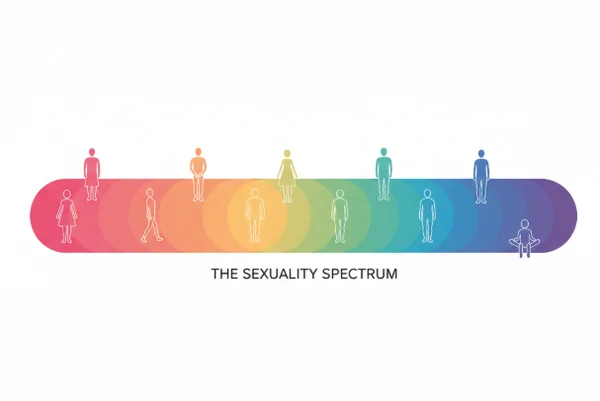
How Does the Sexuality Spectrum Work?
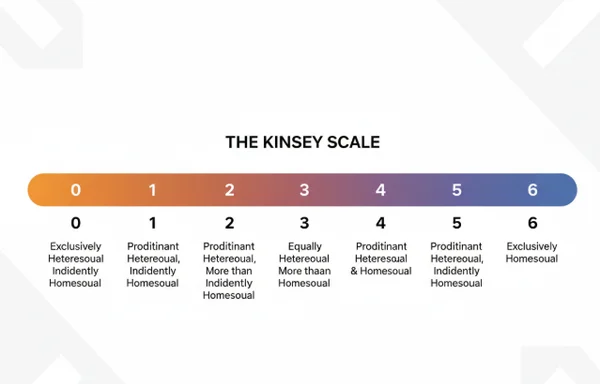
The idea that sexuality sits on a spectrum rather than in rigid categories has been around since the 1940s. Alfred Kinsey, a biologist and researcher, introduced a 0-to-6 scale that placed people along a continuum between exclusively heterosexual (0) and exclusively homosexual (6).
Here is how the Kinsey Scale breaks down:
- 0 — Exclusively heterosexual
- 1 — Predominantly heterosexual, only incidentally homosexual
- 2 — Predominantly heterosexual, but more than incidentally homosexual
- 3 — Equally heterosexual and homosexual
- 4 — Predominantly homosexual, but more than incidentally heterosexual
- 5 — Predominantly homosexual, only incidentally heterosexual
- 6 — Exclusively homosexual
The scale was groundbreaking because it challenged the idea that people must be either straight or gay. Modern researchers have expanded on this concept, recognizing that attraction includes emotional, romantic, and physical dimensions that may not always align.
The Kinsey Scale is not a diagnostic tool. It is a framework for self-reflection — a way to organize your thoughts about where you might currently sit on the continuum.
Can Your Sexuality Change Over Time?
Yes. Research consistently shows that sexuality can be fluid. A large-scale study published in the Journal of Sex Research found that many individuals reported shifts in their attractions across different life stages.
Fluidity does not mean confusion. It means that your experiences, relationships, and self-understanding can naturally evolve. Here are a few patterns people commonly describe:
- Discovering new attractions in a different social environment
- Feeling a gradual shift during major life transitions (college, career change, parenthood)
- Realizing that early assumptions about orientation no longer fit
If your feelings have shifted, that is completely normal. Sexuality is not a destination — it is an ongoing process of self-discovery.
What Shapes Your Sexuality?
No single factor determines your sexuality. Instead, it emerges from a combination of influences:
Biological Factors
Genetics, hormones, and neurological development all play a role. Research suggests that sexuality is polygenic — meaning multiple genes contribute rather than a single "sexuality gene."
Psychological Factors
Your early emotional experiences, attachment patterns, and personal temperament influence how you perceive and express attraction.
Social and Cultural Factors
The society you grow up in shapes which expressions of sexuality feel acceptable or taboo. Cultural norms, religious teachings, family expectations, and media representation all leave a mark.
Personal Experience
Relationships, self-reflection, and lived experience often clarify or shift how you understand your own sexuality.
The key takeaway: your sexuality is yours. No outside force can dictate it, and understanding the factors involved can help you make sense of your unique experience.
How Can You Explore Your Sexuality Safely?
Self-exploration is healthy, but it helps to approach it with intention. Here is a straightforward checklist:
Self-Reflection Checklist for Exploring Your Sexuality
- Notice your patterns. Pay attention to who catches your eye — in daily life, in media, in your imagination. Look for patterns over time rather than isolated moments.
- Separate attraction types. Ask yourself: is this romantic attraction, sexual attraction, aesthetic appreciation, or emotional closeness? They do not always overlap.
- Release the pressure to label. You do not need to pick a term right away. Labels are helpful when they fit, but they are not required.
- Educate yourself. Read about different orientations (like you are doing now). Knowledge reduces anxiety.
- Talk to someone you trust. A supportive friend, family member, or counselor can offer perspective without judgment.
- Use self-reflection tools. Structured frameworks — like the Kinsey Scale — can help you organize your thoughts about sexuality without making any permanent claims about who you are.
- Be patient with yourself. Self-understanding takes time. There is no deadline.
Exploring your sexuality is a personal process. If you find yourself feeling overwhelmed, speaking with a licensed therapist or counselor who specializes in identity and sexuality can be genuinely helpful.

What Is Pansexuality and How Does It Differ from Bisexuality?
This is one of the most frequently asked questions about sexuality, so it is worth a clear answer.
- Bisexual generally means attraction to more than one gender. Some bisexual people feel different levels of attraction to different genders.
- Pansexual means attraction regardless of gender. Gender simply does not factor into who a pansexual person finds appealing.
In practice, there is significant overlap. Many people feel comfortable with either label. The choice often comes down to which word resonates more personally. Neither term is "more inclusive" than the other — both are valid.
When Should You Consider Professional Support?
Self-reflection is powerful, but sometimes you may benefit from professional guidance. Consider reaching out to a qualified counselor or therapist if:
- You feel persistent distress, confusion, or anxiety about your identity
- Societal or family pressure is affecting your mental health
- You are experiencing shame or internalized stigma around your orientation
- You want a safe, confidential space to process your feelings
A good therapist will never tell you what your sexuality is. Instead, they create space for you to figure it out on your own terms.
Your Sexuality, Your Journey — What Comes Next
Understanding what sexuality means is only the starting point. What matters most is giving yourself permission to explore honestly, at your own pace, and without pressure to arrive at a final answer.
Here are the key takeaways from this guide:
- Sexuality is a broad concept that includes attraction, identity, emotions, and behavior
- Sexual orientation is just one part of your larger sexuality
- The sexuality spectrum recognizes that attraction exists on a continuum, not in fixed boxes
- Your sexuality can shift over time — and that is perfectly normal
- Self-reflection tools and frameworks can help you organize your thoughts
If you are curious about where you might fall on the spectrum, you can take the Kinsey Scale exploration — a private, educational tool designed for self-understanding, not diagnosis. It is free, anonymous, and takes just a few minutes.
This article is for informational and educational purposes only. It is not a substitute for professional advice from a licensed mental health provider.
Frequently Asked Questions
What is sexuality in simple words?
Sexuality is the way you experience attraction, desire, and emotional connection with others. It includes your orientation, feelings, and how you express intimacy — and it is unique to every person.
What are the main types of sexual orientation?
The most recognized types include heterosexual, homosexual (gay/lesbian), bisexual, pansexual, asexual, and demisexual. However, sexuality exists on a spectrum, so many people identify with terms beyond these categories.
Is sexuality the same as sexual orientation?
No. Sexuality is the broader concept that covers attraction, behavior, identity, and emotional patterns. Sexual orientation specifically describes who you are attracted to romantically, emotionally, or sexually.
Can sexuality change over time?
Yes. Research supports that sexuality can be fluid. Many people report shifts in their attractions and self-understanding across different stages of life, and this is considered a normal part of human experience.
What is the Kinsey Scale?
The Kinsey Scale is a 0-to-6 framework developed by Alfred Kinsey in the 1940s. It places sexual orientation on a continuum between exclusively heterosexual and exclusively homosexual, recognizing that most people fall somewhere in between.
How do I figure out my sexuality?
Start by noticing your patterns of attraction over time. Separate romantic, sexual, and emotional feelings. Educate yourself, talk to trusted people, and consider using self-reflection tools like the Kinsey Scale to organize your thoughts — without pressure to label yourself permanently.
What does it mean to be pansexual?
Pansexuality means experiencing attraction to people regardless of their gender. For pansexual individuals, a person's gender identity does not play a role in determining romantic or sexual attraction.
What is the difference between sex and sexuality?
Sex refers to biological traits such as chromosomes, hormones, and reproductive anatomy. Sexuality is about your attractions, desires, identity, and how you experience intimate connection with others. They are related but distinct concepts.